Olivia Neumann · 4 October 2026
Cross-Platform Sync Challenges in Note Apps for Hybrid Teams Navigating Post-Migration Data Flows
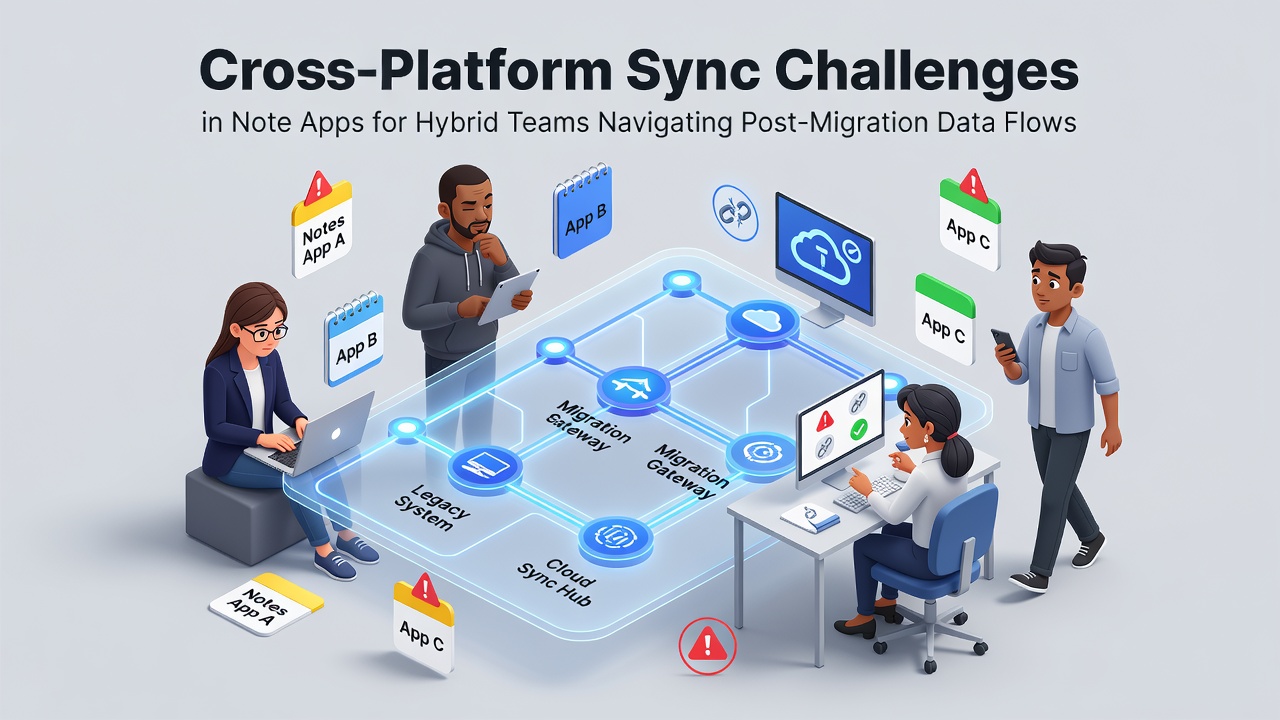
Hybrid teams rely on note applications to maintain shared records across locations and devices yet post-migration environments frequently introduce friction in data synchronization processes. Organizations that completed infrastructure shifts in recent years continue to manage inconsistencies where notes updated on one platform fail to appear correctly on others while timestamps drift and attachments become inaccessible. These issues stem from differences in how each operating system handles data packets during transfer along with variations in API versions that applications use to communicate with central servers.
Data Flow Complications After Migration
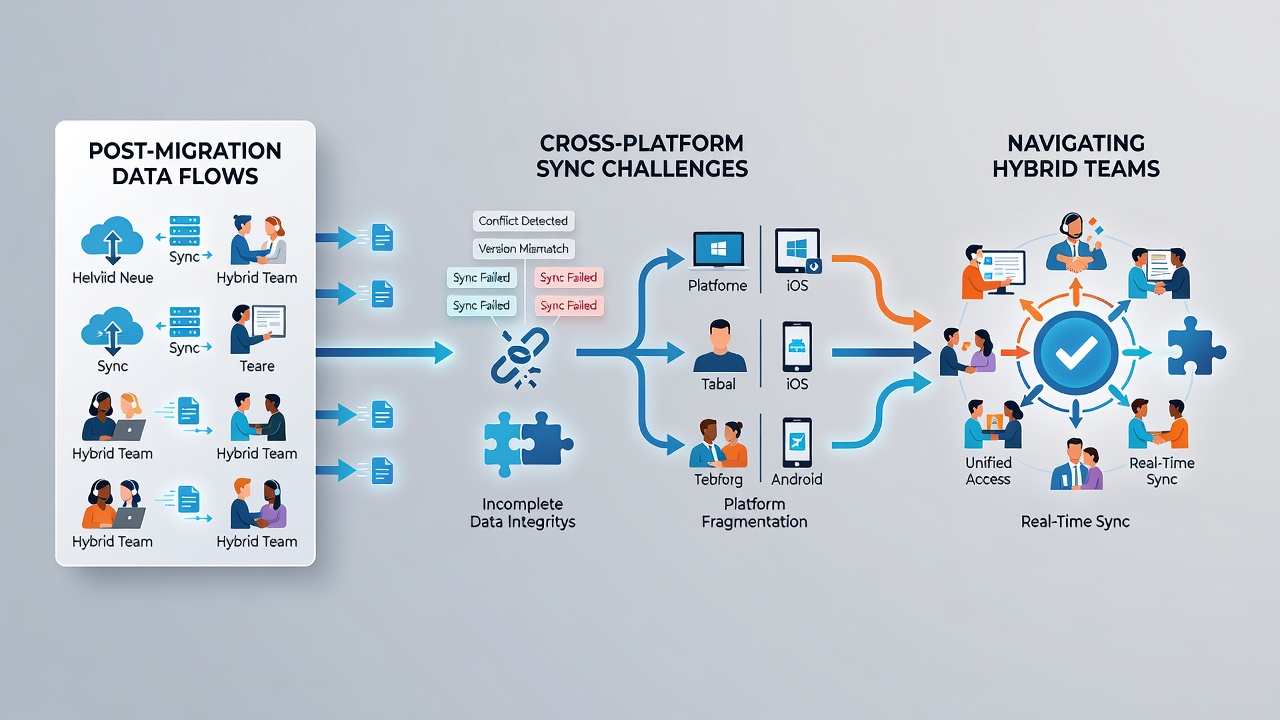
Teams encounter latency when notes move between legacy and new systems because migration tools often convert formats in batches that leave temporary gaps in metadata. Research indicates that data streams require additional validation steps after transfer to prevent duplication or loss while protocols from different vendors impose conflicting rules on conflict resolution. Observers note that hybrid setups amplify these problems since employees switch devices multiple times daily and each switch triggers a fresh sync attempt that competes with ongoing uploads from teammates.
According to a report published by the National Institute of Standards and Technology, migration projects involving collaborative software show elevated error rates in the first six months when data flows cross operating system boundaries. The same analysis highlights how encryption layers added during migration can slow real-time updates because each device must decrypt and re-encrypt content before displaying changes to users.
Platform-Specific Hurdles in Note Synchronization
Mobile applications on iOS and Android implement background sync differently from desktop clients running Windows or macOS and these differences create visible gaps during collaborative sessions. One study from the University of Toronto tracked note updates across 200 hybrid teams and found that 37 percent of conflicts originated from mismatched handling of rich text elements such as embedded tables and images. Desktop versions often retain full formatting while mobile clients strip certain attributes to reduce payload size which forces the central server to reconcile versions that no longer match exactly.
Network conditions further complicate matters because hybrid workers connect through corporate VPNs one moment and public Wi-Fi the next and each transition alters packet routing paths. Data shows that sync failures spike during peak afternoon hours when multiple team members attempt simultaneous edits on shared documents. Those who have monitored these patterns report that applications sometimes queue updates without clear indicators leaving users unaware that their changes remain unsynchronized.
Effects on Hybrid Team Workflows
Hybrid teams depend on consistent visibility into project notes yet sync delays disrupt decision-making cycles when one member references an outdated version during a call. Figures from October 2026 reveal that organizations using multiple note platforms experienced a 22 percent increase in revision requests compared with the previous quarter as data reconciliation tasks consumed additional hours. The rubber meets the road when project deadlines approach and incomplete sync states prevent accurate status reporting across distributed groups.
Experts have observed that attachment handling presents another persistent obstacle because file references stored in notes sometimes point to locations that become invalid after storage infrastructure changes. Teams must then locate and reattach documents manually which interrupts the flow of information and increases the chance of version mismatches. Researchers discovered that applications lacking robust logging make it difficult to trace the origin of these discrepancies leaving support staff to reconstruct events from incomplete records.
Patterns Observed in October 2026
Monitoring data collected during October 2026 shows that cross-platform conflicts clustered around specific file types including spreadsheets embedded within notes and links to external resources that required re-authentication after migration. Teams using three or more device types reported higher incident volumes than those limited to two platforms and the gap widened when operating system updates occurred mid-month. Analysts at the Australian Institute of Digital Transformation documented similar trends across surveyed enterprises and noted that organizations with standardized update schedules experienced fewer disruptions overall.
Conflict resolution mechanisms built into note applications handle simple text edits reliably in most cases yet struggle when simultaneous changes affect structured data such as checklists or tagged entries. The ball remains in the developers' court to refine algorithms that detect and merge these complex edits without requiring user intervention.
Conclusion
Cross-platform synchronization in note applications continues to present measurable challenges for hybrid teams managing post-migration data flows. The issues arise from format conversions, protocol differences, network variability, and attachment management across diverse devices. Data gathered through late 2026 underscores the need for continued refinement of sync protocols and logging practices that allow teams to maintain accurate shared records regardless of platform or location.