Viktor Werner · 20 September 2026
How Version Control Enhances Reliability in Digital Note Platforms for Remote Professionals
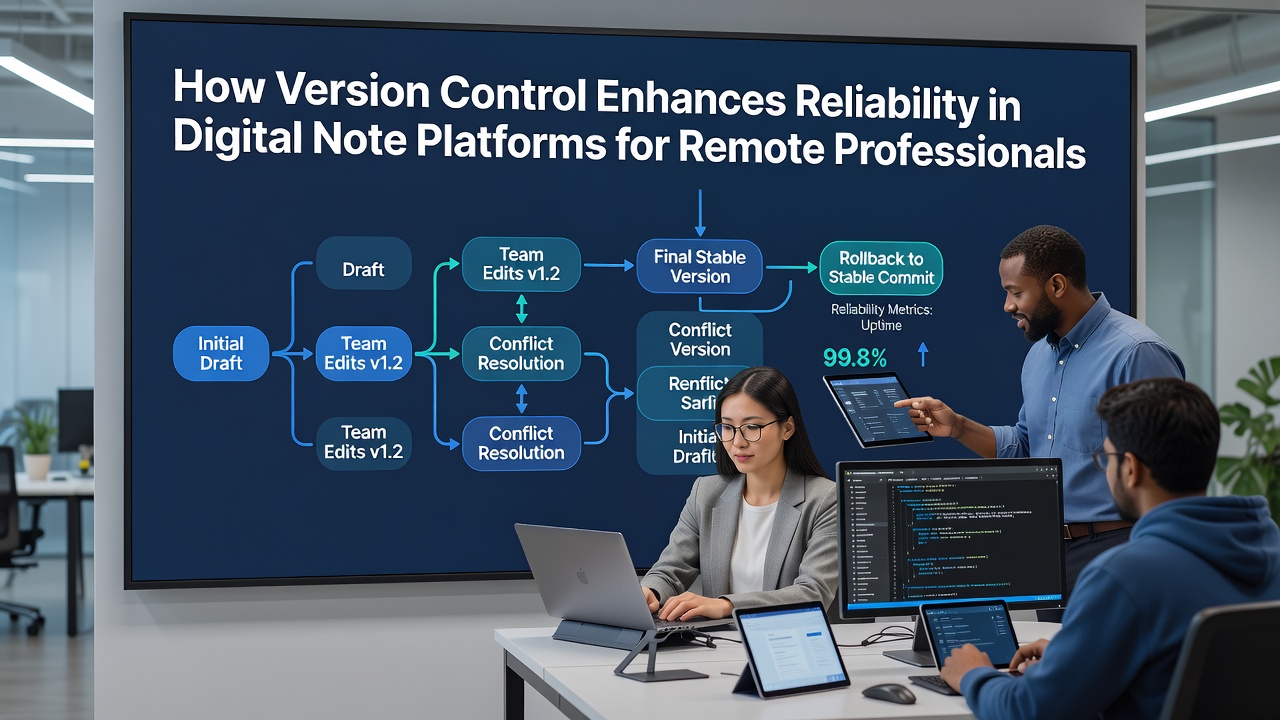
Digital note platforms serve remote professionals who manage projects across time zones and devices, and version control systems track every edit while preserving previous states of documents. Researchers at institutions like the University of Melbourne have documented how these mechanisms reduce data loss incidents by maintaining complete revision histories that allow quick restoration after accidental overwrites or device failures. Data from industry reports shows that platforms incorporating version control see fewer collaboration conflicts because changes from multiple users merge systematically rather than overwriting one another.
Core Mechanisms Behind Version Control in Note Systems
Version control operates through snapshots that capture content at specific points in time, and each snapshot includes metadata such as timestamps and author identifiers. This structure enables users to compare differences between iterations and revert to earlier versions without external backups. Observers note that remote teams benefit when platforms store these histories on distributed servers, which prevents single-point failures from disrupting access during network outages. Studies indicate that features like branching allow professionals to experiment with note structures in isolated environments before integrating successful changes into the main document.
Impact on Data Integrity for Distributed Workforces
Remote professionals often edit notes on laptops, tablets, and smartphones, and version control synchronizes these edits across locations while flagging inconsistencies. According to findings from the National Institute of Standards and Technology, systematic change tracking improves overall data reliability by creating audit trails that verify modifications. Teams that rely on such systems report fewer instances of duplicated work because the platform automatically resolves merge conflicts through predefined rules. In September 2026, several major platforms introduced enhanced conflict resolution algorithms that further streamlined these processes for global users.
Collaboration Without Overlap Risks
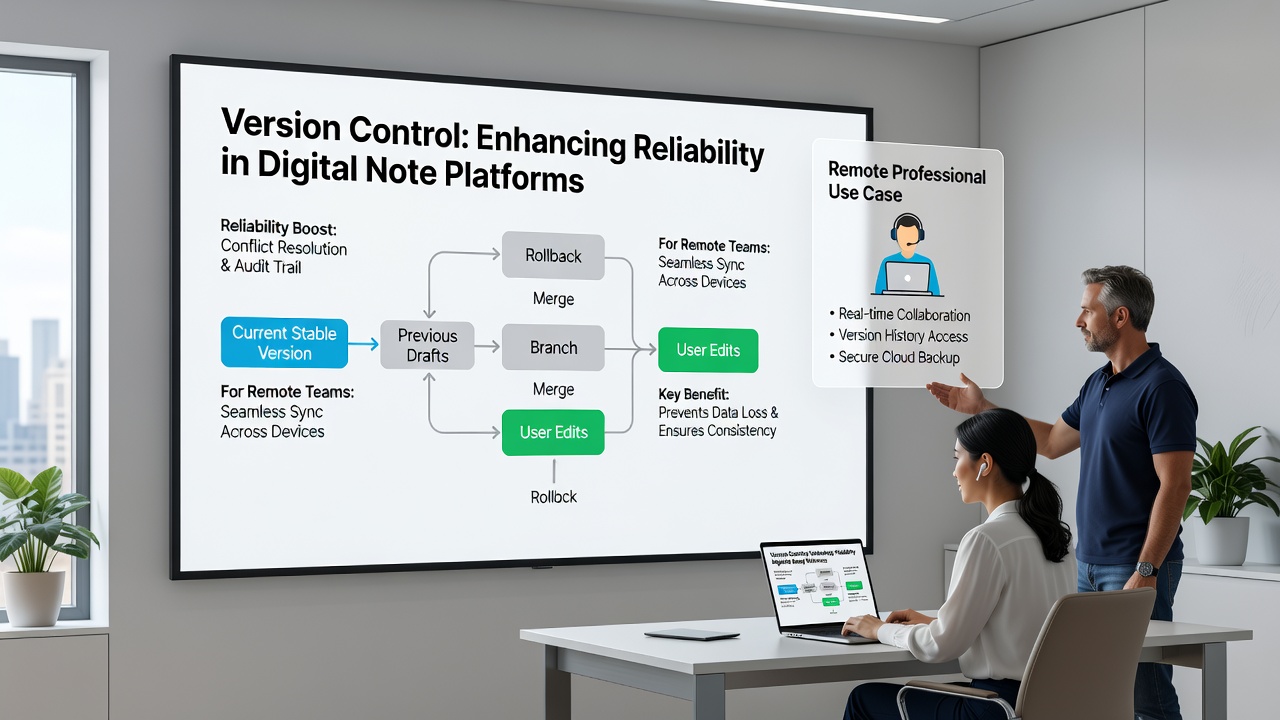
Multiple contributors can work on the same note simultaneously when version control maintains separate edit streams until integration occurs. This approach eliminates the risk of one user's input erasing another's because each contribution receives its own timestamped record. Experts have observed that platforms using these methods support larger remote teams without requiring constant manual coordination. Research indicates that audit capabilities built into version control also help organizations meet compliance requirements by providing verifiable records of who accessed or altered sensitive information.
Recovery Processes and Long-Term Reliability
When hardware malfunctions or software crashes occur, version control allows restoration to any prior state within seconds rather than hours. Professionals who have experienced such recoveries highlight how this capability maintains workflow continuity across continents. Data shows that platforms without version control experience higher rates of permanent content loss during unexpected events. Those who've studied these systems know that incremental storage techniques keep resource usage manageable even as note collections grow over months or years.
Integration With Existing Remote Work Tools
Many digital note platforms connect version control directly to project management applications and calendar services, and this linkage ensures that updates reflect in shared team resources automatically. Government reports from agencies like Innovation, Science and Economic Development Canada emphasize that reliable note systems contribute to overall productivity in distributed work settings. Integration also extends to security protocols where encrypted version histories protect against unauthorized access during transmission. Remote professionals gain consistent access because the underlying architecture prioritizes synchronization speed alongside data preservation.
Conclusion
Version control delivers measurable improvements to reliability in digital note platforms through structured change tracking, conflict resolution, and rapid recovery options. Remote professionals depend on these features to maintain accurate records across varied devices and schedules. Evidence from multiple studies confirms that adoption of such systems correlates with reduced data incidents and stronger collaborative outcomes. Platforms continue to refine these capabilities as remote work patterns evolve.