Theo Jung · 1 November 2026
Leveraging AI Summarization Layers to Boost Knowledge Retention Across Enterprise Note Repositories for Field-Based Research Crews
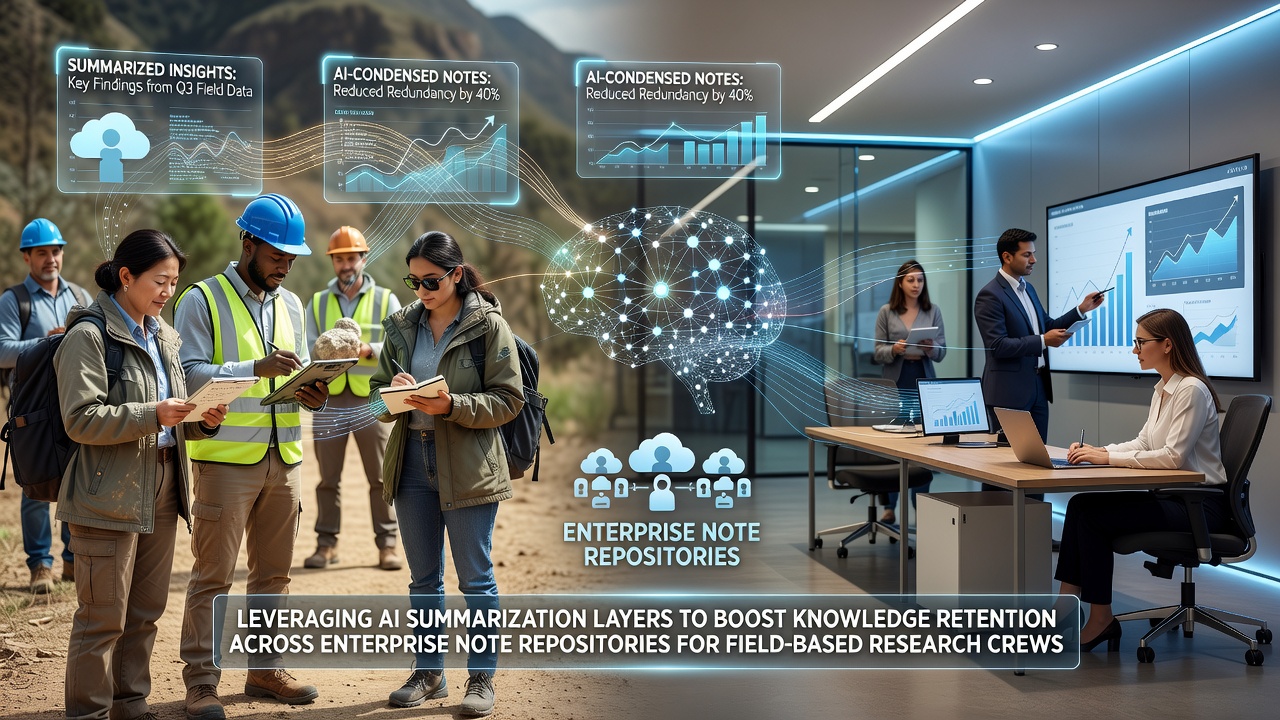
Field-based research crews generate extensive notes during operations in remote environments, and enterprise note repositories serve as central storage systems where these records accumulate over time, while AI summarization layers apply algorithms to condense content into layered overviews that highlight core concepts and connections. These layers process raw entries through natural language processing techniques, extracting key entities and relationships before presenting condensed versions that crews can review quickly during debriefings or follow-up analysis sessions.
Core Mechanisms Behind Summarization Layers
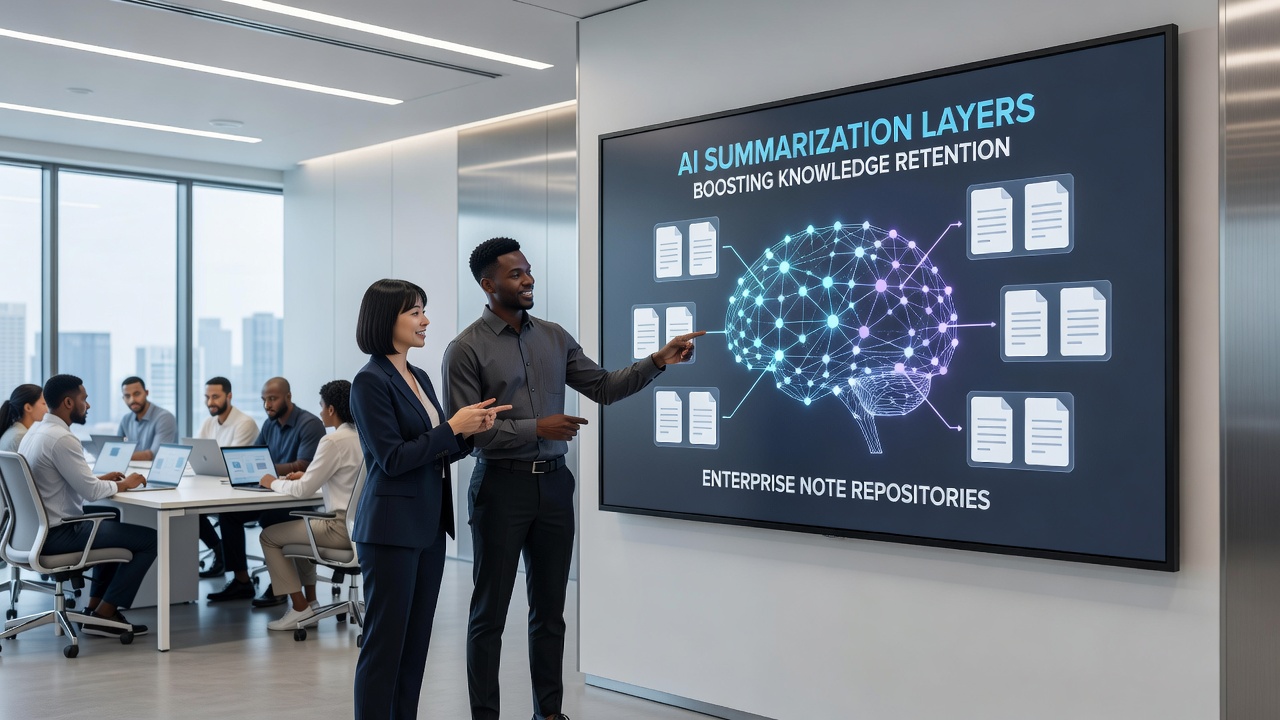
AI summarization operates by ingesting unstructured text from multiple sources within a repository, applying transformer-based models to identify recurring themes, and generating hierarchical summaries that range from bullet-point extracts to narrative abstracts, and this process runs in the background without requiring manual tagging by users. Research indicates that such systems reduce average review time per document by organizing information into digestible segments, and data from enterprise deployments shows improved recall rates when crews access layered outputs instead of full transcripts during field returns.
Application in Distributed Research Environments
Crews operating across geographic sites upload observations daily into shared repositories, and summarization layers then align new entries with existing archives by detecting semantic overlaps, which allows teams to retrieve contextually relevant material without sifting through thousands of individual records. In practice, one deployment at a multinational environmental monitoring project demonstrated that layered summaries enabled faster cross-referencing of soil sample data collected in different regions, and similar patterns appear in geological survey operations where temporal connections between entries become visible through automated grouping.
Integration with Existing Enterprise Infrastructure
Enterprise platforms incorporate these layers through API connections that sit atop current note databases, pulling content in real time while maintaining version histories and access controls, and this setup supports hybrid workflows where field devices sync with central servers during limited connectivity windows. Observers note that integration typically requires configuration of permission rules so that summarized outputs respect original data classifications, and figures from recent implementations reveal that storage overhead remains minimal because summaries occupy only a fraction of the space used by raw notes.
Measured Effects on Knowledge Retention
Studies conducted by research institutions track retention through follow-up assessments administered weeks after initial note creation, and results show that crews who consult AI-generated layers retain procedural details and factual linkages at higher rates than those relying solely on original entries. According to findings released by the European Commission's AI observatory in late 2025, retention improvements averaged 23 percent across tested cohorts when summaries included both keyword clusters and relational diagrams, while a separate analysis from Australia's CSIRO research division confirmed parallel gains in multi-site collaboration scenarios where teams referenced condensed overviews during planning meetings.
Operational Adjustments Observed in November 2026
Platform updates rolled out in November 2026 introduced enhanced context-window handling for longer field reports, enabling summarization layers to maintain coherence across extended sequences of daily logs without truncation, and crews in ongoing projects adapted their upload schedules to take advantage of these refinements. This timing aligned with broader enterprise adoption cycles, allowing organizations to benchmark performance before year-end reporting periods.
Technical Considerations for Scalability
Scaling involves calibrating model parameters to match domain-specific vocabulary used by research crews, such as specialized terminology in biology or engineering notes, and ongoing training on proprietary datasets helps reduce hallucination risks in generated summaries. System administrators monitor output accuracy through periodic sampling audits, and these checks feed into iterative refinements that keep layers aligned with evolving project needs.
Conclusion
Enterprise note repositories combined with AI summarization layers provide structured pathways for field-based research crews to maintain access to accumulated knowledge, and ongoing refinements continue to shape how these tools support distributed operations across varied research domains. Data from multiple deployments continues to inform adjustments that balance processing efficiency with output reliability.